Learn the vinyl t-shirt printing process (HTV)—from file prep and weeding to heat press transfer, peel type, final press, and wash-care for durable custom t-shirts.

Explore our guides and FAQs to choose the right product, print method, and timeline.
For the cleanest vinyl printing process results, upload vector artwork when possible: AI, EPS, SVG, or PDF. If you’re sending raster files (PNG/JPG), aim for 300 DPI at print size so edges don’t look jagged—especially on small text and thin lines.
Yes. A quick pre-press helps remove moisture and wrinkles so the vinyl bonds more consistently, and a final press (top press) helps set edges and improve long-term wear. This is a key part of a high-quality heat transfer vinyl process, especially for layered designs.
Hot peel vs cold peel HTV depends on the vinyl type: some are designed to peel immediately while warm, while others must cool before peeling. We confirm the correct peel method per vinyl and fabric, and test when needed to prevent lifting and ensure clean results.
How long vinyl lasts on t-shirts depends on the vinyl, fabric, and care. For best durability, wait before the first wash, wash inside out with mild detergent, avoid bleach and fabric softeners, use low heat or air dry, and avoid ironing directly on the vinyl—these steps reduce common vinyl peeling after wash causes
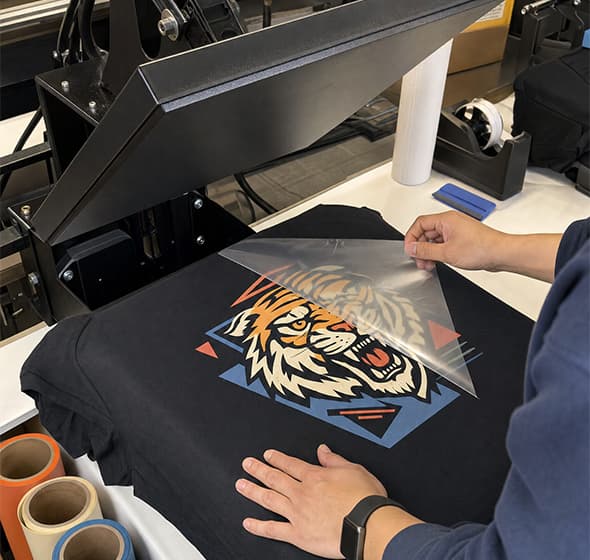
The vinyl printing process (also called the heat transfer vinyl process or HTV printing process) uses heat and pressure to bond cut vinyl graphics onto custom t-shirts. We start by preparing your artwork for clean cutting, then cut each color from vinyl, remove the extra material in the weeding vinyl process, align the design on the garment, and apply a controlled heat press vinyl transfer process. After pressing, we peel the carrier sheet (hot/warm vs cold peel depends on the vinyl type), then finish with a brief top press to help edges lay flat and improve long-term wear.
Below is how Vinyl t-shirt printing works in a clean, production-ready workflow (not a DIY supply approach).
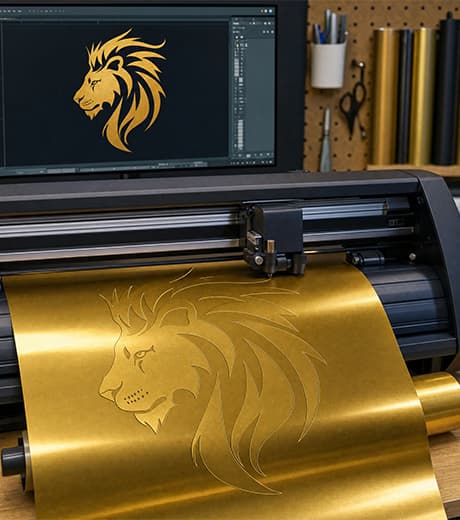
We review your artwork for the best file format for vinyl printing and crisp edges. Vector files cut cleanest (vector vs raster for Vinyl t-shirt printing). If you send a raster image, we may simplify/clean it and confirm detail limits. Aim for high-resolution art; 300 DPI at final print size is a strong baseline for raster files.
For this cut Vinyl for t-shirts process, we prepare the design so it cuts accurately and presses correctly on the garment. Certain layouts are cut in a mirrored orientation so the finished vinyl reads correctly after transfer—handled for you during production.
We remove unwanted Vinyl around and inside the design (small counters like letters and numbers) during the weeding vinyl process. This step is critical for sharp details and clean edges.
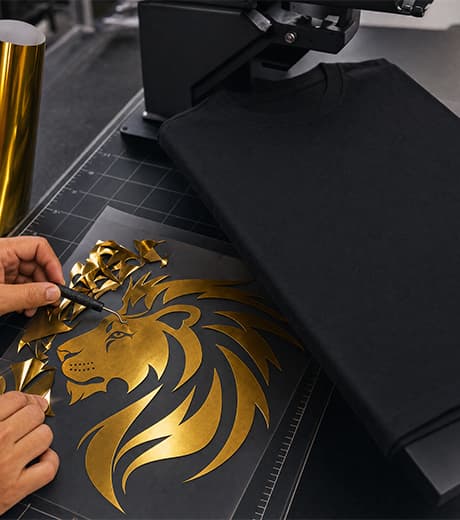
We remove unwanted Vinyl around and inside the design (small counters like letters and numbers) during the weeding vinyl process. This step is critical for sharp details and clean edges.
We briefly pre-press to remove moisture and wrinkles and help the vinyl adhere more consistently. This is especially helpful for blends and performance fabrics.
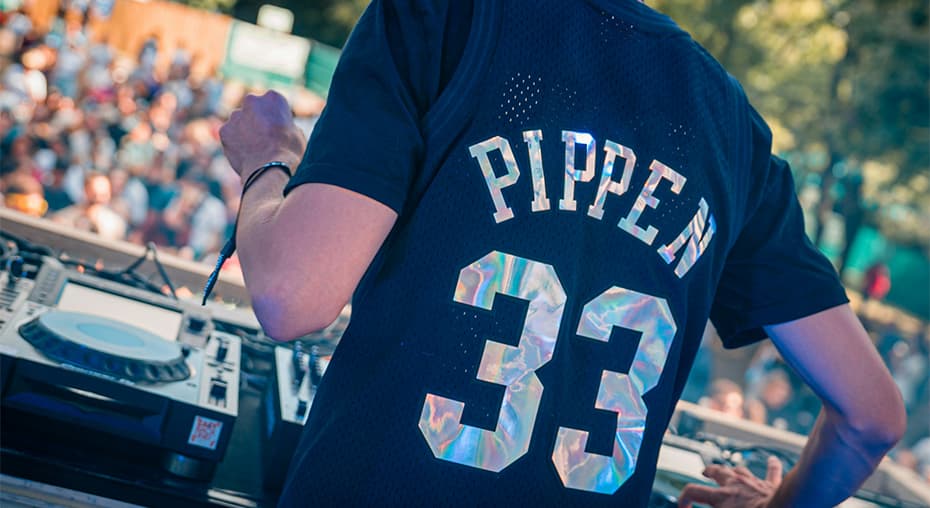
We position the design using consistent alignment points for readable layouts—especially for jersey name and number vinyl process work and uniform personalization vinyl t-shirts. You will receive proof for approval when needed.
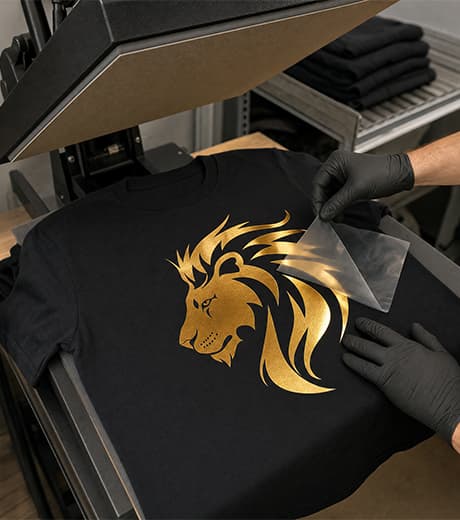
We apply controlled heat and pressure using a heat press. Peel timing varies: hot peel vs cold peel HTV depends on the vinyl type and finish. We confirm the correct method per job and test when needed.
For multi-color HTV, we press layers in sequence with careful alignment. Some specialty films require specific order or spacing, which we account for to keep edges clean and minimize bulk.
A finishing press helps set edges, smooth the surface, and improve overall durability. We inspect adhesion, alignment, and edge integrity, then provide vinyl t-shirts wash instructions to support long wear and reduce vinyl peeling after wash causes.
Find the right decoration style for your t-shirts.

Prints vibrant ink on fabric, ideal for bulk orders with bold, long-lasting designs.
Explore More
Prints directly into the fabric; ideal for small runs with highly detailed, full-color artwork.
Explore More
Uses heat-applied transfers; good for detailed prints on mixed garment types.
Explore More
Stitched decoration; best for logos and small designs on polos, caps, and outerwear.
Explore More